If you've noticed an error on the site, the information is inaccurate, or something is missing — let us know! Or maybe you'd like to suggest an idea — we'd love to hear it.


Phantom pain is the sensation of pain in a part of the body that no longer physically exists. It most often occurs after limb amputation, when the brain continues to send nerve signals to the missing body part. Receiving no feedback, the brain may interpret this "silence" as a pain signal, which is perceived as real and often intense pain.
Phantom pain can feel like burning, cramping, tingling, squeezing, or an electric shock. Its intensity ranges from mild discomfort to unbearable pain. It can occur at rest, at night during sleep, or intensify after emotional stress.
Duration varies individually: from a few seconds to several days. Most often the pain appears within the first six months after amputation and gradually decreases over time. However, in some people it can persist for years and significantly affect quality of life.
Treatment of phantom pain combines:
An important component is working with the psyche, the emotional sphere, and imagination. Methods that directly affect brain function play a special role, in particular neuropsychological desensitization — an approach that works through the body, breathing, attention, imagination, and rhythmic movements.
1. Feel your support. Sit comfortably, feel the support of your body. Mentally say: "I am in my body. I am safe."
2. Breathing. Take a full exhale through your mouth, then:
Repeat 5 times.
3. Rhythmic movements. Alternately tap your left and right knee, thigh, or shoulder, or move your eyes left-right for 30–60 seconds.
4. Imagination. Imagine the lost limb without pain. Add a feeling of warmth, light, and a protective symbol to the image — a shield, water, light.
5. Completion. Mentally repeat: "My body works with me. I am safe."
This technique helps reduce tension, calm the nervous system, and ease painful sensations.
Important. The technique is more effective when performed regularly: 4–5 cycles per session, twice a day, for a month.
EFT, or the Emotional Freedom Technique, combines light tapping on certain points of the body with saying calming phrases. It helps reduce both physical and emotional pain, including phantom pain.
1. Rate your pain on a scale from 0 to 10.
2. Formulate a setup statement. For example: "Even though I feel pain in my lost limb, I accept myself and allow my body to heal."
3. Lightly tap on the points:
Tap with your fingers on both sides, lightly, alternately, at a comfortable pace. Movements should be soft and rhythmic.
4. While tapping, repeat:
Repeat 1–3 cycles. After each cycle, take a deep breath in through your nose and a slow exhale through your mouth.
5. Assess the result — rate the pain level again on a scale from 0 to 10. Repeat the exercise if needed.
Technique adapted by the National Council of Psychologists of Ukraine.
Remember. Regular use of these techniques helps reduce pain intensity, increases the sense of control over the body, and improves quality of life.
How treatment affects intimate life and what helps preserve it: advice on communicating with a partner, comfort, and self-care.
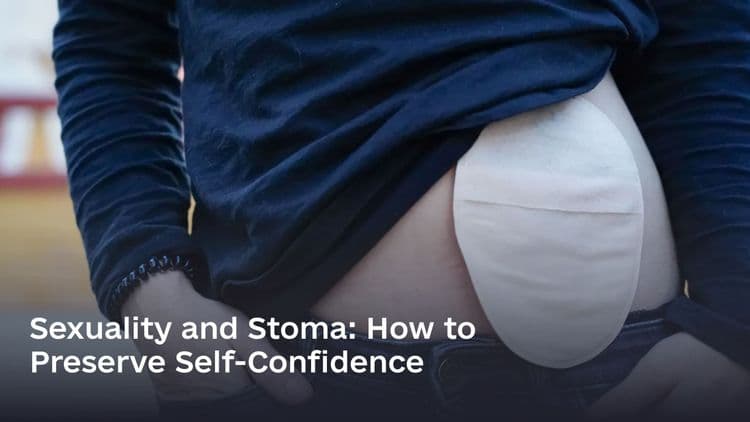
Living with a stoma doesn't rule out intimacy: how to accept bodily changes, overcome fear of injury, and regain confidence in relationships.

A collection of supportive phrases that help replace negative beliefs with inner strength and restore a sense of balance during treatment.