If you've noticed an error on the site, the information is inaccurate, or something is missing — let us know! Or maybe you'd like to suggest an idea — we'd love to hear it.


It all began in 2021 with an innocent cough. Nothing serious, it seemed. But ahead of Olena lay three misdiagnoses, including treatment for a tuberculosis she never had. Time passed, and her true diagnosis — Hodgkin's lymphoma — was established far too late.
By the time Olena arrived at the National Cancer Institute, the disease had already relapsed.
Ahead of her were new courses of chemotherapy and an autologous bone marrow transplant at the National Cancer Institute's Department of Oncohematology and Clinical Oncology. She went through this entire difficult journey under the care of Dr. Nazar Shokun and Dr. Iryna Kriachok — with a team that doesn't just treat, but supports, fights, and believes alongside the patient.
This period became for Olena not only a medical challenge but also a time of profound transformation. She didn't break — she rethought her life and learned to value every new breath.
"At the start of my journey, I had three misdiagnoses — I even received treatment for tuberculosis I never had. Then came a lack of medication, bureaucratic red tape, bribery, depression, despair, and debt. But at the same time, there was support from doctors, family, friends, acquaintances, and even strangers. That's what helped me keep going.
More than once I gave up. I asked God to take me. But the instinct to live is an incredibly powerful thing — more powerful than cancer, death, or despair. Psychotherapy helped me not to lose myself during treatment. Later, Gestalt therapy and metacognitive practices brought me back to life."
"More than two years have passed since my transplant. I'm 29. I still don't know what I want to be when I grow up, or what the meaning of life is. But I can taste it again, see its beauty, and breathe it in fully."
"Regardless of whether you have a diagnosis or not — don't put up with feeling bad. This applies to pain, toxic relationships, a job you hate, uncomfortable shoes, or anything else. You can change it!"
Olena's story shows the price of lost time: three misdiagnoses delayed the start of proper treatment. If symptoms don't go away and prescribed therapy isn't working, it's worth insisting on further examination and seeking a second opinion from a specialized institution.
Regular preventive check-ups, attention to changes in how you feel, and a responsible attitude toward your health can preserve what matters most — life.
We are grateful to you, Olena, for this sincere, profound, and powerful story. You are an example of incredible courage. And we are immensely proud of every doctor and every nurse who stands beside patients every day in the most difficult moments of their lives.
Take care of yourself and of those you love.

After a mastectomy and two years with a prosthesis, National Cancer Institute surgeons performed DIEP reconstruction and simultaneously transplanted a lymph node to treat arm swelling.
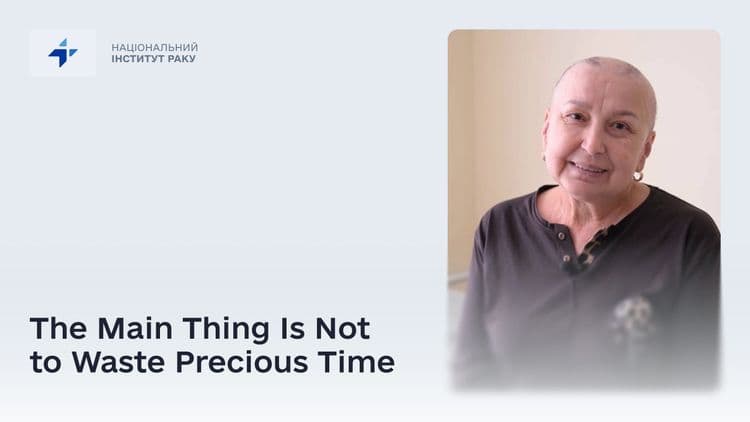
Back pain turned out to be multiple myeloma. How a railway station chief underwent a bone marrow transplant and returned to work.
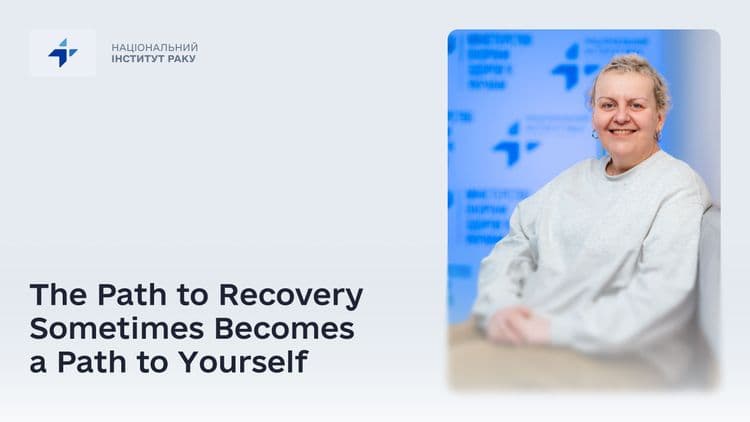
Cancer doesn't always hurt: a routine mammogram changed the life of a National Cancer Institute employee. About chemotherapy, surgery, and support you don't expect.