If you've noticed an error on the site, the information is inaccurate, or something is missing — let us know! Or maybe you'd like to suggest an idea — we'd love to hear it.


A modern nuclear medicine center will be established at the National Cancer Institute, significantly expanding the diagnostic capabilities for oncological diseases in Ukraine. The project is being implemented as part of a Ministry of Health state program with support from the European Union.
The center will become one of two such centers in Ukraine — the second is planned for Lviv. The creation of centers similar to those operating in almost all major European cities will provide patients with better access to PET-CT diagnostics using modern radiopharmaceuticals.
The center will be equipped with a full set of equipment comprising 46 items. Its main component will be the comprehensive production of radiopharmaceuticals using equipment from General Electric's PET trace 800 series (PETtrace Kunpeng) for the diagnosis of cancer patients.
Similar nuclear medicine centers have long been operating in Poland (Warsaw, Kraków, Łódź), the Czech Republic (Prague, Brno), Germany (Berlin, Munich), and other European cities — based at large hospitals and medical campuses.
The State Enterprise "Medical Procurement of Ukraine," acting on behalf of the Ministry of Health, has already procured the equipment for the center.
Given the lengthy production cycle, delivery of the equipment to the National Cancer Institute is not expected before July 2027.
The Institute is currently actively preparing for the launch: technical requirements for the premises are being developed, and preparations are underway for the installation of specialized equipment. Funding for this work is provided for in the draft State Budget of Ukraine for 2026, which will allow installation to begin as soon as the equipment is delivered.
The creation of a nuclear medicine center is an important milestone in the development of modern cancer diagnostics in Ukraine. It will provide patients with broader access to high-precision PET-CT diagnostics and improve the effectiveness of cancer treatment.

A pilot project covering 10 implantations for women combat veterans — after a combat injury or breast cancer. Eligibility and how to apply.
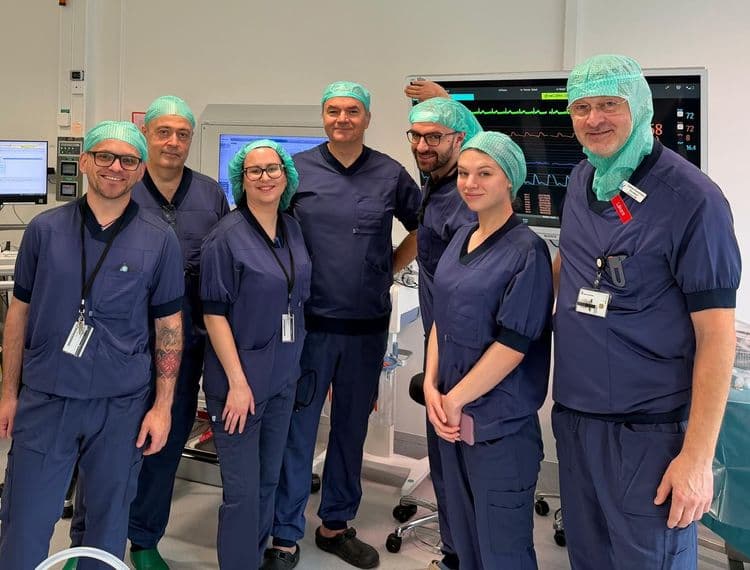
Five specialists saw the transplant system at Karolinska University Hospital from the inside, from donor coordination to the operating room.

The 2026 class of interns has joined the Institute's team. Ahead of them lie clinical practice, mentorship from experienced specialists, and their first independent decisions.