If you've noticed an error on the site, the information is inaccurate, or something is missing — let us know! Or maybe you'd like to suggest an idea — we'd love to hear it.

The EU's "Europe's Beating Cancer Plan" has launched a new EU-Supported Cancer Screening Scheme, to ensure highly effective screening programs in all member states.
The EUCanScreen project aims to support the sustainable implementation of high-quality screening programs for breast, cervical, and colorectal cancer, as well as the rollout of recommended screening programs for lung, prostate, and stomach cancer.
The project's main goal is to reduce the burden of cancer and achieve equity in access to screening across the entire EU.
Participants — 29 countries, including 25 EU member states, as well as Ukraine, Moldova, Norway, and Iceland.
The project is coordinated by the University of Latvia, and it involves 28 competent authorities, 61 affiliated partners, and 7 associated partners.
Project identification number: 101162959, LU registration No. ZD2024/21709 Project implementation period: 01.06.2024 – 31.05.2028 Total project funding: €38,749,935 Funding for the University of Latvia: €4,228,546
(a complete list of 61 organizations, including centers from Latvia, Austria, Belgium, Croatia, Cyprus, Estonia, Finland, France, Germany, Greece, Hungary, Iceland, Ireland, Italy, Lithuania, the Netherlands, Norway, Poland, Portugal, Romania, Slovakia, Slovenia, Spain, Sweden, and Ukraine). Among the Ukrainian partners:
University of Latvia (Latvijas Universitāte) Email: [email protected] Website: www.eucanscreen.eu
The project "Implementation of cancer screening programs (EUCanScreen)," registration No. LU ZD2024/21709, is funded by the European Union's EU4Health program, Grant agreement no. 101162959.
The project is co-funded by the EU. Views and opinions expressed are those of the author(s) only and do not necessarily reflect those of the European Union or HADEA. Neither the European Union nor the granting authority can be held responsible for them.

A pilot project covering 10 implantations for women combat veterans — after a combat injury or breast cancer. Eligibility and how to apply.
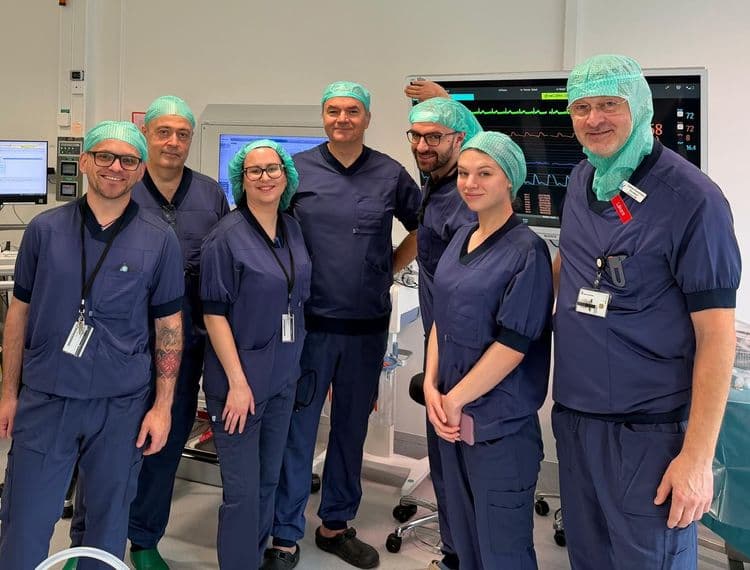
Five specialists saw the transplant system at Karolinska University Hospital from the inside, from donor coordination to the operating room.
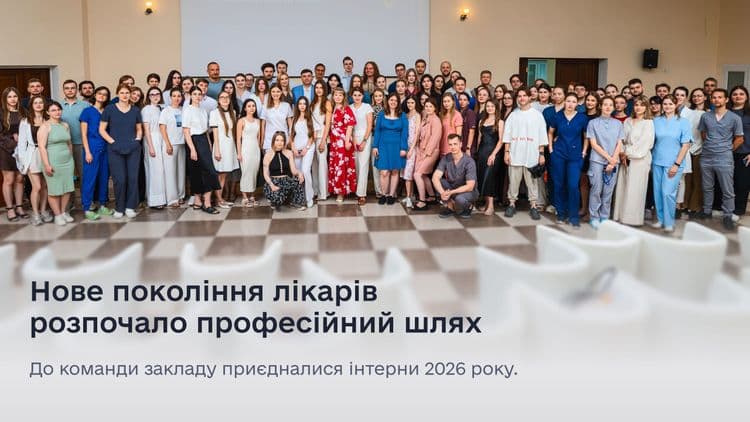
The 2026 class of interns has joined the Institute's team. Ahead of them lie clinical practice, mentorship from experienced specialists, and their first independent decisions.