If you've noticed an error on the site, the information is inaccurate, or something is missing — let us know! Or maybe you'd like to suggest an idea — we'd love to hear it.

Our understanding of cancer diagnostics traces back to an extraordinary discovery — X-rays that "pass through the body."
Ukrainian physicist Ivan Puliuj (1845–1918) was the first to conduct fundamental experiments with cathode rays, as early as 1881. He created the "Puliuj lamp" — a vacuum tube that emitted rays capable of ionizing a medium, passing through the body, and producing clear X-ray images, including of a child's skeleton. He explained the nature of these rays and laid a powerful scientific foundation for the further development of radiology.
German physicist Wilhelm Röntgen continued research into "X-rays" in 1895 and produced the first X-ray image. For this he received the Nobel Prize in 1901 and is considered the official discoverer of X-ray radiation.
Soon after, the world gained the unique ability to "see" inside the body.
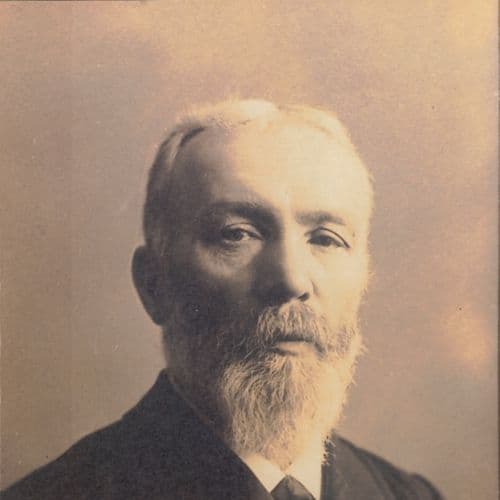
Ivan Puliuj
Image from vue.gov.ua
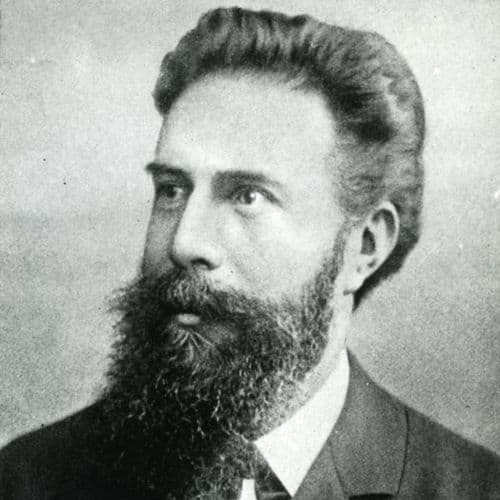
Wilhelm Röntgen
Image from dhm.de
Kyiv's first X-ray rooms appeared starting in 1898 — for example, at the hospital of the Pokrovsky Convent. These rooms marked the beginning of the institutional history of cancer care.
In 1920, the Kyiv X-ray Institute was formed on the basis of the X-ray service. This is the starting point from which the history of the modern National Cancer Institute is dated.
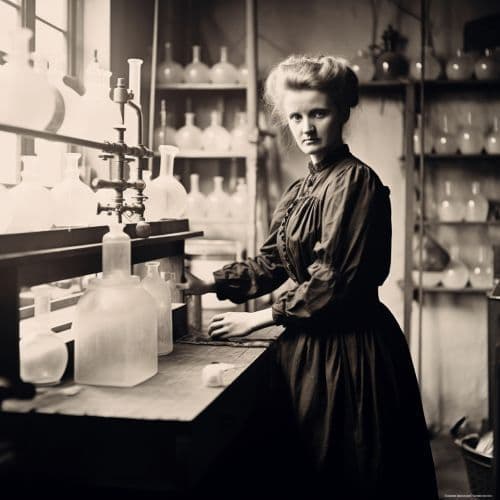
Marie Curie
Image from canonica.ai
In the 1920s, the institute actively developed what was then the cutting-edge field of radiotherapy. In 1925, radium from Marie Curie arrived in Kyiv, accelerating the establishment of radiation therapy. In 1934, the first oncology clinic opened with 50 beds, which tripled in size after the war. During this period, the institute became a center of scientific and treatment standards for the entire country.
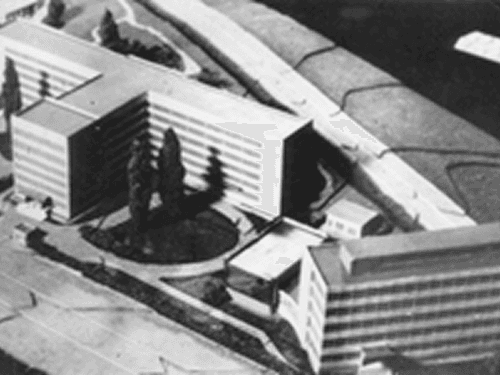
The Institute, 1960s
The postwar decades were a difficult but fruitful time: new departments opened, combined treatment methods were introduced, research deepened, and a new generation of physicians was trained. The institute became not just a clinic, but Ukraine's only structure combining several fields — clinical, scientific, and educational — into a new, integrated medical system.
One of the Institute's most recognizable features is the massive mosaic "Victory" (1970–1971) on the facade of the administrative building. It was created by the husband-and-wife team Halyna Zubchenko and Hryhorii Pryshedko. The panel, roughly 9×12.7 m, was made from smalti, ceramics, and colored glass. Art historians consider the panel a kind of reinterpretation of Saint George defeating the dragon.

The "Victory" mosaic
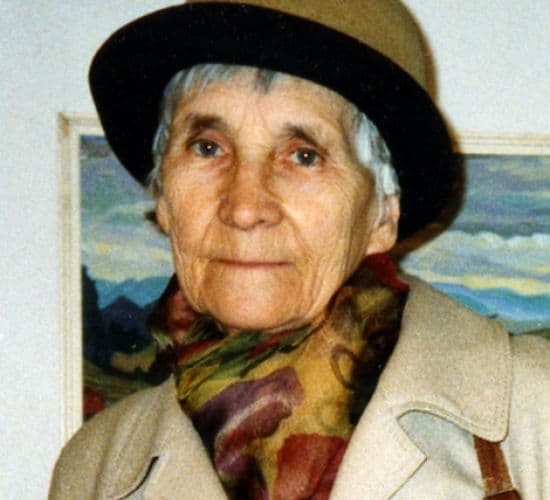
Artist Halyna Zubchenko
Image from my.etnoua.info
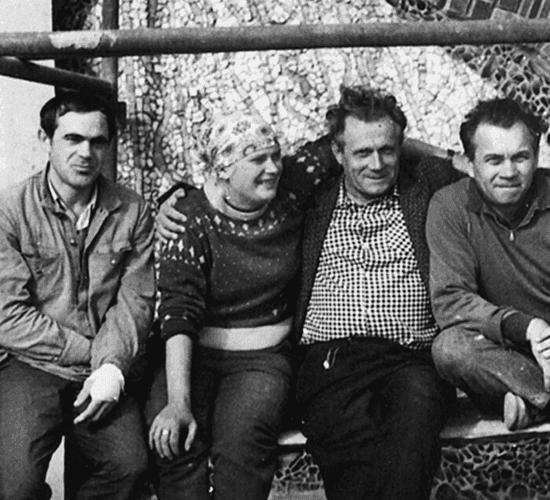
Hryhorii Pryshedko, Alla Horska, Hryhorii Synytsia, and Viktor Zaretskyi on the mosaic scaffolding, 1965
Image from argumentua.com
Today, the National Cancer Institute is a key center of cancer care in Ukraine. It practices the highest standards of treatment, trains specialists, conducts research, and develops recommendations for state oncology policy.
Several generations of physicians and researchers built what we have today together. This history is our valuable heritage and an inspiring proof that every effort, every moment of shared work, matters on the path toward major change to save people's lives.